

Highlights
- Daily guided practices in breath, food timing, movement, and cold/heat, introduced gently and reinforced through repetition
- A small, supportive cohort with direct access to coaches throughout the stay
- A setting designed to remove distraction, urgency, and decision fatigue
- Chef-supported Mediterranean meals that support metabolic ease and calm evenings
- Comfortable glamping accommodations built for sleep, recovery, and nervous system downshift
Field report
Structured observations from this edition, not a clinical trial.
This note summarizes what we observed during and after the March 2026 cohort in Guaro. It is not a clinical study. It is a structured recap of program delivery, participant reflections, and practical lessons we are carrying into future editions.
Hosted at Costa del Soul · View venue record →
Cohort context
The March edition brought together a focused cohort at Costa del Soul in the hills outside Málaga. Participants arrived with different reasons for being there: stress, transition, loss of rhythm, curiosity, physical reset, and the sense that their usual tools were no longer enough.
That range mattered. The week was not designed around one outcome. It was designed around restoring conditions: breath, food timing, movement, cold, heat, sleep, conversation, and enough space for the nervous system to stop defending itself.
Program structure
The rhythm of the week was deliberately simple. Mornings created structure through breathwork, movement, and guided practice. Meals supported metabolic steadiness without turning food into a source of control. Cold and heat exposure were introduced progressively, with safety, consent, and regulation prioritized over performance.
The middle of the day left room for rest, journaling, informal conversation, and integration. Evenings were kept quieter, because the program was not only about what participants could experience during the day, but about whether their systems could settle at night.
What participants reported most often
The strongest theme was not intensity. It was reconnection.
Several participants described feeling their bodies again in a way they had not experienced for years. Others noticed that the cold became less about endurance and more about trust. Breathwork gave many of them a practical way to interrupt stress before it became a spiral.
The most meaningful shifts were often subtle: sleeping more deeply, feeling less reactive, eating with more awareness, laughing more easily, asking better questions, or realizing that discipline does not have to feel punitive.
Practices participants were most likely to continue
The practices most likely to continue were the ones that mapped easily onto real life.
Breath protocols during moments of stress.
Short cold exposure at home.
Earlier or simpler eating windows.
Walking.
Evening downshifts.
More deliberate use of heat.
Participants were less interested in recreating the retreat perfectly and more interested in taking home a usable operating rhythm.
That became an important lesson: integration improves when practices are small enough to survive contact with ordinary life.
Re-entry friction points
The first two weeks home made the real work visible.
Travel fatigue, inbox pressure, family rhythms, social meals, and old environmental cues were the main sources of friction. The challenge was not that participants lacked motivation. It was that their home systems were designed around different defaults.
This confirmed one of the central premises of the program: behavior change does not fail only inside the person. It often fails at the interface between the person and their environment.
Lessons for future editions
The March edition made clear that the retreat itself is only the first layer.
For future editions, we are strengthening the re-entry architecture: clearer written summaries during the week, more explicit links between each practice and daily-life application, and an optional post-edition accountability touchpoint after participants return home.
We are also tightening the relationship between heat, cold, sleep, and recovery so participants understand not only what each practice does, but when and why to use it.
What we carry forward
Future editions keep the same core structure: focused cohort, natural protocols, progressive exposure, guided integration, and environments that support recovery.
The main evolution is clearer translation from experience to practice. Less information in the abstract. More direct connection between each protocol and the real moments where participants need it: the stressful email, the disrupted night, the social meal, the return to work, the moment when old patterns begin to reassert themselves.
The goal is not to create dependence on the retreat environment.
The goal is to help participants leave with a system they can actually live inside.
Individual experiences vary. Nothing here diagnoses, treats, or promises a medical outcome.
Where this edition took place
Costa del Soul · Guaro hillside setting
Costa del Soul is not a hotel and not a bootcamp.
It is a quiet, intentionally designed environment where your nervous system can downshift and regulate without effort.
Participants slept in real beds, breathed fresh air, and experienced natural light and silence. Evenings were calm. Mornings were unhurried. The setting supported recovery and nervous system regulation naturally.


Because when the environment supports you, consistency stops being a struggle.
How this edition ran
Program Structure
- •Morning practices to establish rhythm and physiological readiness
- •Midday space to rest, integrate, or work remotely if needed
- •Structured training sessions introduced progressively
- •Nourishing meals that support energy during the day and calm at night
- •Evenings designed for downshift, sleep quality, and recovery
Daily Rhythm
Morning
Guided practices to establish rhythm and physiological readiness
Midday
Structured training sessions introduced progressively
Afternoon
Time for integration, rest, or remote work if needed
Evening
Nourishing meals and downshift designed for sleep quality
The Humans Behind the Challenge
This is not a spa retreat.
It is a high-touch reset led by practitioners who live the work they teach.
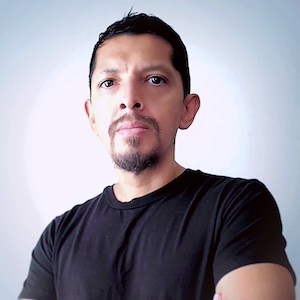
Oscar Trelles
Program Director
Founder of Breathing Flame
Systems thinker, entrepreneur, systemic coach, founder of Breathing Flame, and author of The Human OS Manual, publishing October 15, 2026. Oscar leads curriculum and facilitation through a systems lens shaped by more than two decades in high-performance environments and the long process of rebuilding his own health, recovery, and operating rhythm after burnout.
“I want you to be so fit and healthy, that food and pharma companies can't profit from you.”

Karen Jacobson
Head of Nourishment
Accredited Nutritionist
Practical lens on fasting, metabolic resilience, and whole-food habits participants can sustain after they leave the mountain. Aligns teaching with kitchen execution so plates and snacks reflect what is covered between sessions.
“Good food is not just fuel, it is code that gives the right messages to your body.”

Brian Fland
Head of Fitness
Coach and Tech-Sales Veteran
Former tech-sales leader who builds sustainable fitness around demanding calendars, travel, and altitude realities. Sessions balance strength and mobility with recovery days and mixed levels while keeping independence and confidence central.
“The most important part of aging is being flexible and strong enough to remain independent”
This activation has concluded
Thank you to everyone who joined this cohort. We publish field notes on this page when available.